GUIDE · SPRINGS
How the two main types of garage door springs work, how to tell which one you have, and why the safety details matter.
State certified · Lic. #SCC131153490
Licensed & insured
Hurricane-rated new doors
Free estimates
GARAGE DOOR SPRINGS
Your garage door’s springs do almost all the lifting. There are two main types, and knowing which one you have helps when something goes wrong.
Torsion springs twist. As the door closes, the cables wind the springs tighter; when it opens, the springs unwind and turn the drums that lift the door. Most newer doors, and most hurricane-rated installations, use torsion springs. Heavier or wider doors often have two.
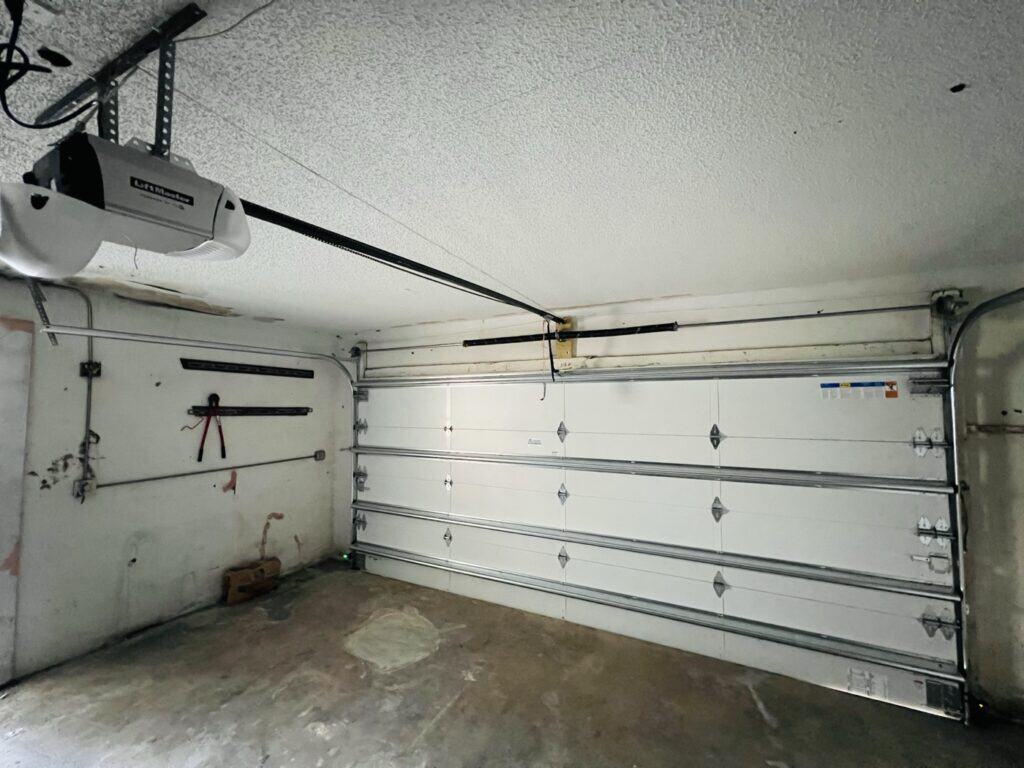
Extension springs stretch. When the door closes, they extend and store energy; when it opens, they contract and pull the door up through pulleys and cables. You’ll find them on some older and lighter doors.
Safety cables matter. An extension spring should have a safety cable running through its center, so if the spring breaks, it can’t whip across the garage. If yours don’t have them, mention it to your technician.
Both work when they’re the right size for the door and installed correctly. Torsion systems keep the door more balanced and are standard on most new doors. Some homes with extension springs can be converted to a torsion system; we can tell you whether it makes sense for your door.
Standard springs are commonly rated for about 10,000 open-and-close cycles, whichever type you have, and longer-life springs are available. On a two-spring door, both springs usually wear at the same rate. See broken garage door spring: signs and what to do.
Both types store enough energy to cause serious injuries. Torsion springs must be wound and unwound with the right tools, and extension springs are under tension whenever the door is closed. We replace both types across Broward, Miami-Dade and Palm Beach, including Davie, Weston and Pembroke Pines. See garage door spring repair.
Free estimates, no charge to come out. Call (954) 241-1979 or request a free estimate.
Call (954) 241-1979 or send the form below for a free estimate.
FAQ
Often, yes. It depends on your door and the space above it; we’ll check during the estimate.
Heavier or wider doors need more lifting force, so the load is split between two springs.
The lift cables connect the springs to the bottom of the door; on extension springs, a separate safety cable runs through each spring.
WHY PRO GARAGE DOORS
A locally owned South Florida company. One number to call, one team responsible for your job.
Serving Miami-Dade, Broward and Palm Beach.
Florida license #SCC131153490. Licensed & insured.
Every new door we install is impact-rated.
Every garage door and opener we install comes with customer-oriented, easy to claim warranties!
REVIEWS
SERVICE AREA
We serve homes across Miami-Dade, Broward and Palm Beach counties.